 Don't Stop Reading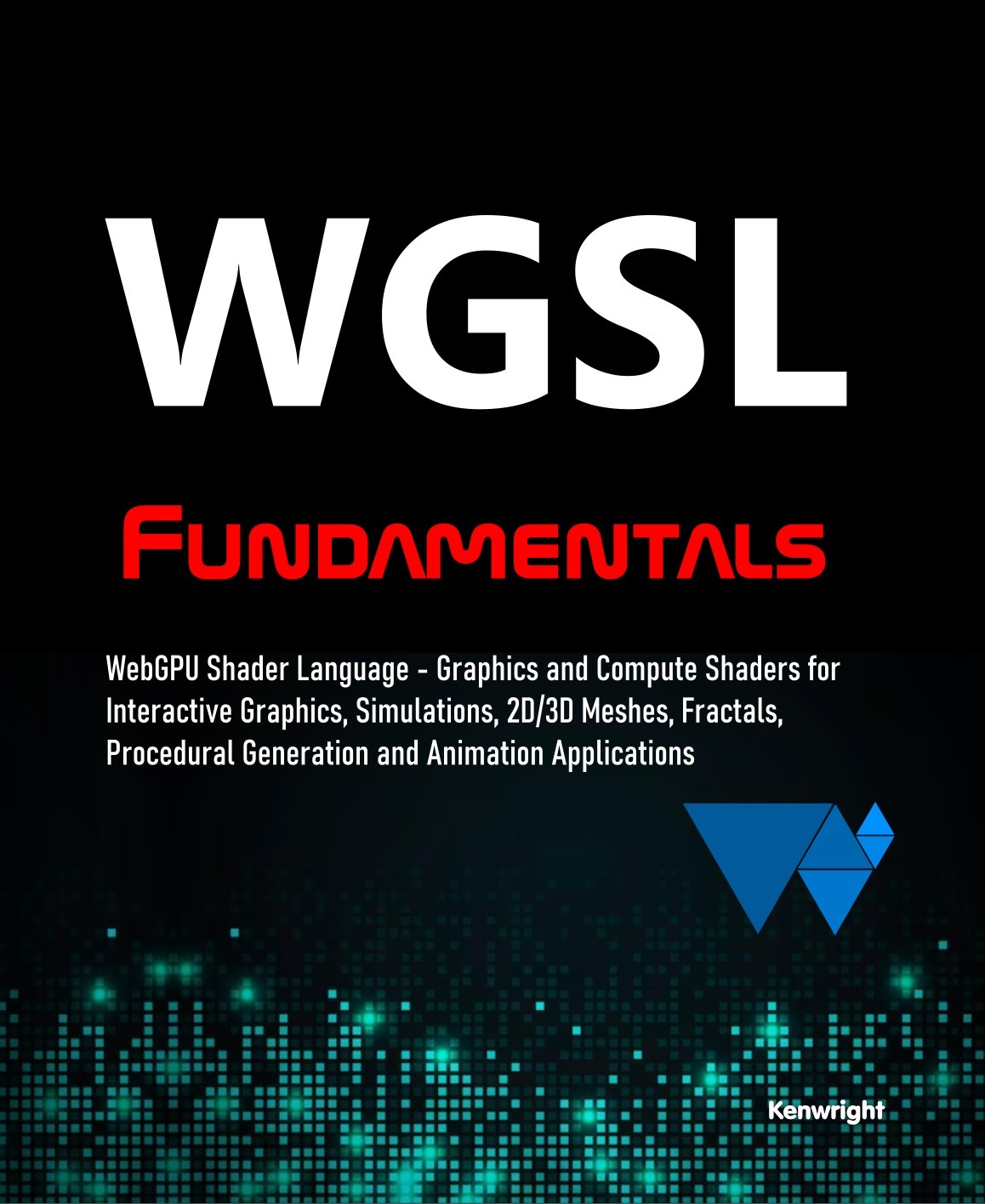
WGSL Fundamentals: WebGPU Shader Language - Graphics and Compute Shaders for Interactive Graphics, Simulations, 2D/3D Meshes, Fractals, Procedural Generation and Animation Applications
This comprehensive guide to webgpu, wgsl, graphics provides developers with practical knowledge and advanced techniques. Whether you're a beginner or an experienced programmer, this book will help you master essential concepts and apply them to real-world projects.
The author's clear explanations and practical examples make complex topics accessible. Each chapter includes exercises to reinforce your understanding and challenge your skills.
Reader Reviews
This one surprised meWGSL Fundamentals: WebGPU Shader Language - Graphics and Compute Shaders for Interactive Graphics, Simulations, 2D/3D Meshes, Fractals, Procedural Generation and Animation Applications
I've been reading WGSL Fundamentals: WebGPU Shader Language - Graphics and Compute Shaders for Interactive Graphics, Simulations, 2D/3D Meshes, Fractals, Procedural Generation and Animation Applications and it completely transformed how I approach webgpu. The examples are practical and the explanations are crystal clear.

Not what I expected fromWGSL Fundamentals: WebGPU Shader Language - Graphics and Compute Shaders for Interactive Graphics, Simulations, 2D/3D Meshes, Fractals, Procedural Generation and Animation Applications
I've been reading WGSL Fundamentals: WebGPU Shader Language - Graphics and Compute Shaders for Interactive Graphics, Simulations, 2D/3D Meshes, Fractals, Procedural Generation and Animation Applications and it completely transformed how I approach compute. The examples are practical and the explanations are crystal clear.

Would I recommendWGSL Fundamentals: WebGPU Shader Language - Graphics and Compute Shaders for Interactive Graphics, Simulations, 2D/3D Meshes, Fractals, Procedural Generation and Animation Applications
I've been using WGSL Fundamentals: WebGPU Shader Language - Graphics and Compute Shaders for Interactive Graphics, Simulations, 2D/3D Meshes, Fractals, Procedural Generation and Animation Applications as a textbook for my compute course, and my students absolutely love it!

Why I lovedWGSL Fundamentals: WebGPU Shader Language - Graphics and Compute Shaders for Interactive Graphics, Simulations, 2D/3D Meshes, Fractals, Procedural Generation and Animation Applications
WGSL Fundamentals: WebGPU Shader Language - Graphics and Compute Shaders for Interactive Graphics, Simulations, 2D/3D Meshes, Fractals, Procedural Generation and Animation Applications contains advanced techniques for graphics that even experienced developers will find valuable.
Frequently Asked Questions
Is this book suitable for beginners?
Yes, WGSL Fundamentals: WebGPU Shader Language - Graphics and Compute Shaders for Interactive Graphics, Simulations, 2D/3D Meshes, Fractals, Procedural Generation and Animation Applications starts with the basics and gradually progresses to more advanced topics, making it suitable for beginners.
Does this book include practical examples?
Absolutely! WGSL Fundamentals: WebGPU Shader Language - Graphics and Compute Shaders for Interactive Graphics, Simulations, 2D/3D Meshes, Fractals, Procedural Generation and Animation Applications is filled with real-world examples and practical exercises to reinforce the concepts.
What programming languages are covered?
WGSL Fundamentals: WebGPU Shader Language - Graphics and Compute Shaders for Interactive Graphics, Simulations, 2D/3D Meshes, Fractals, Procedural Generation and Animation Applications primarily focuses on webgpu but the concepts can be applied to various languages.
Are there any online resources that accompany this book?
Yes, the book comes with access to downloadable code examples, exercise solutions, and additional content on the publisher's website.
Related Books
View All

Latest Book News
Stay updated with the latest happenings in the literary world

Today’s Wordle Hints, Answer and Help for July 31, #1868
Here are hints and the answer for today’s Wordle for July 31, No. 1,868.

How a 13th-Century Monk Created a Prayer Manuscript by Writing Over—and Accidentally Preserving—Archimedes’ Groundbreaking Mathematical Works
In Jerusalem of the year 1229, there lived a Greek Orthodox monk named Johannes Myronas. Needing some parchment for a prayer book, he grabbed some alr...

I Used Every AI Cheating App and Detector and Came to One Conclusion
Can AI judge human work from robot slop, or is every AI-detection tool out there completely worthless?

What Miles Davis Taught Herbie Hancock: In Music, as in Life, There Are No Mistakes, Just Chances to Improvise
One of my favorite Brian Eno quotes, or rather one that became an Oblique Strategy, is “Honor Your Mistake as a Hidden Intention.” (Or to be pedan...

Christopher Hitchens Explains Why Homer’s Odyssey Still Matters to Our World (2000)
At the moment, the answer to the question of why we should read Homer’s Odyssey seems rather straightforward: so we can more intelligently voic...

Umberto Eco’s Personal Library Opens to the Public: More Than 32,000 Books, Exactly as He Left Them
Umberto Eco’s The Name of the Rose sold so well that its English translator William Weaver could add an extension onto his Tuscan villa, which ...